AI Adoption Surges, But Americans Still Want Humans in Charge of Financial Decisions
TECHNOLOGY
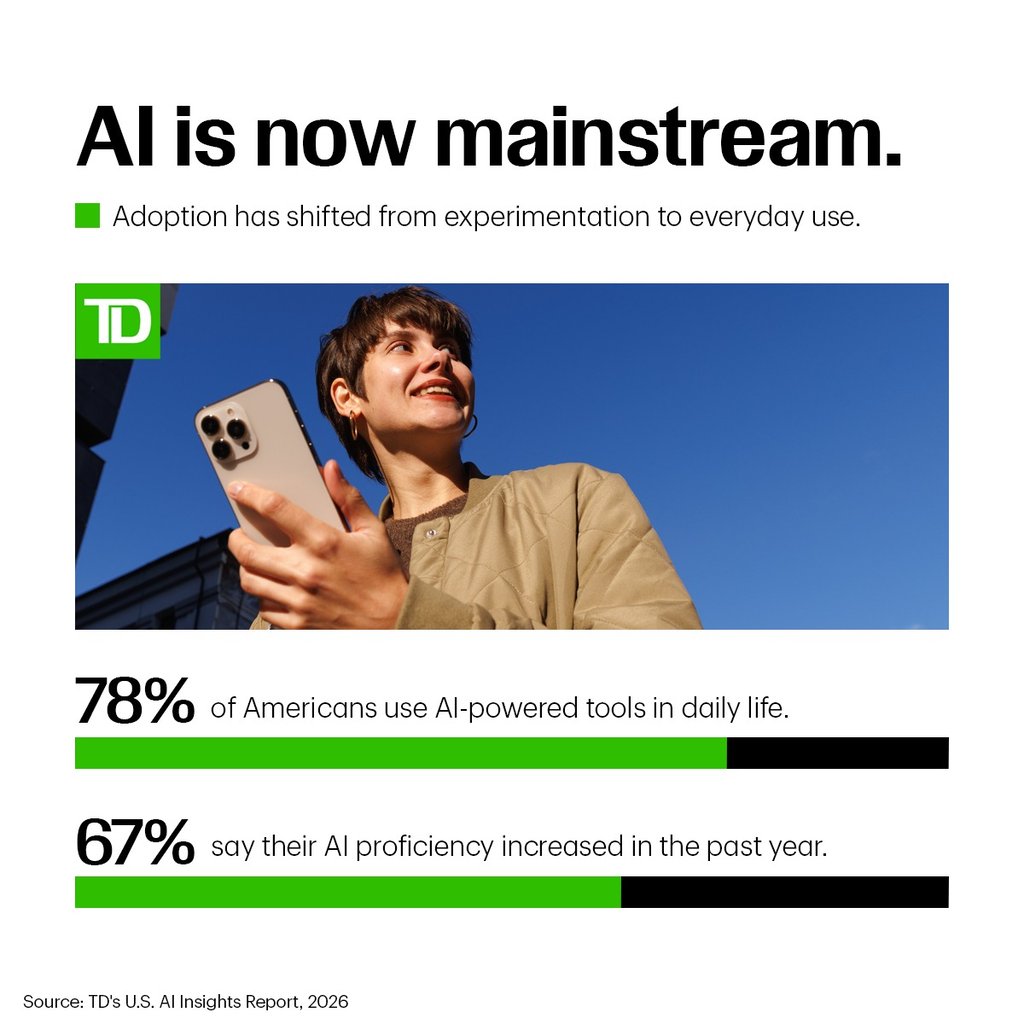
TD’s latest report highlights AI’s transition to everyday use, underscoring the continued importance of trust and human oversight.
Artificial intelligence has officially moved from novelty to necessity in everyday life, but when it comes to money, Americans are drawing a clear line.
According to a new survey from TD, nearly 80% of Americans now use AI-powered tools, signaling a major shift in how consumers interact with technology. Yet despite this rapid adoption, trust in AI for financial decision-making remains limited, with most consumers still preferring human oversight.
From Experimentation to Everyday Use
AI is no longer something consumers are just “trying out.” It’s becoming embedded in daily routines.
The report found that 78% of Americans actively use AI tools, with many reporting increased confidence and familiarity compared to just a year ago.
This growth is especially pronounced in personal finance. More than half of consumers, 55%, now use AI to help manage financial decisions, a dramatic increase from previous years.
Younger generations are leading the charge, with adoption rates highest among Gen Z and Millennials. But the data shows that AI usage is expanding across all age groups, signaling a broader cultural shift.
The Trust Gap in Financial Decisions
Despite the widespread use of AI, trust hasn’t caught up.
Only 18% of respondents said they would trust AI to make financial recommendations on its own, highlighting a significant gap between usage and confidence.
Instead, consumers are embracing a hybrid approach, using AI for speed, convenience, and insights, while relying on humans for accountability and final decision-making.
In fact, many respondents indicated they would prefer slower, human-reviewed recommendations over fully automated AI decisions, reinforcing the importance of trust in financial services.
AI as a Tool, Not a Decision Maker
The findings point to a clear shift in how consumers view AI:
AI is a tool for guidance, not authority
Speed and efficiency matter, but not at the expense of trust
Human expertise remains essential in high-stakes decisions
Consumers are increasingly comfortable asking AI for information, but they remain cautious about relying on it without human validation, especially when it comes to complex financial choices.
This reflects a broader understanding that while AI can process data and generate recommendations, it often lacks the full context needed to make deeply personal financial decisions.
What This Means for Financial Institutions
For banks, fintech companies, and financial advisors, the takeaway is clear:
The future isn’t AI versus humans, it’s AI plus humans.
Consumers expect institutions to integrate AI in ways that enhance the experience, making it faster, smarter, and more personalized, while still maintaining transparency, accountability, and human oversight.
This creates a unique opportunity for financial brands to differentiate themselves by building trust into their AI strategies.
The Bigger Picture
Adoption is no longer the barrier, trust is.
As AI becomes more embedded in everyday life, the companies that succeed won’t just be the most advanced, they’ll be the most trusted.
Because when it comes to money, speed matters...but confidence matters more.
Related Stories
Lotti Media © 2025-2026
Lotti MEDIA is your go-to source for multi-industry insights, innovation, and more.
Stay in the Know
Join our mailing list today.
Powered by: Lotti Communications