
KOA Report Reveals Camping Industry Growth and Wellness Trends
HOSPITALITY
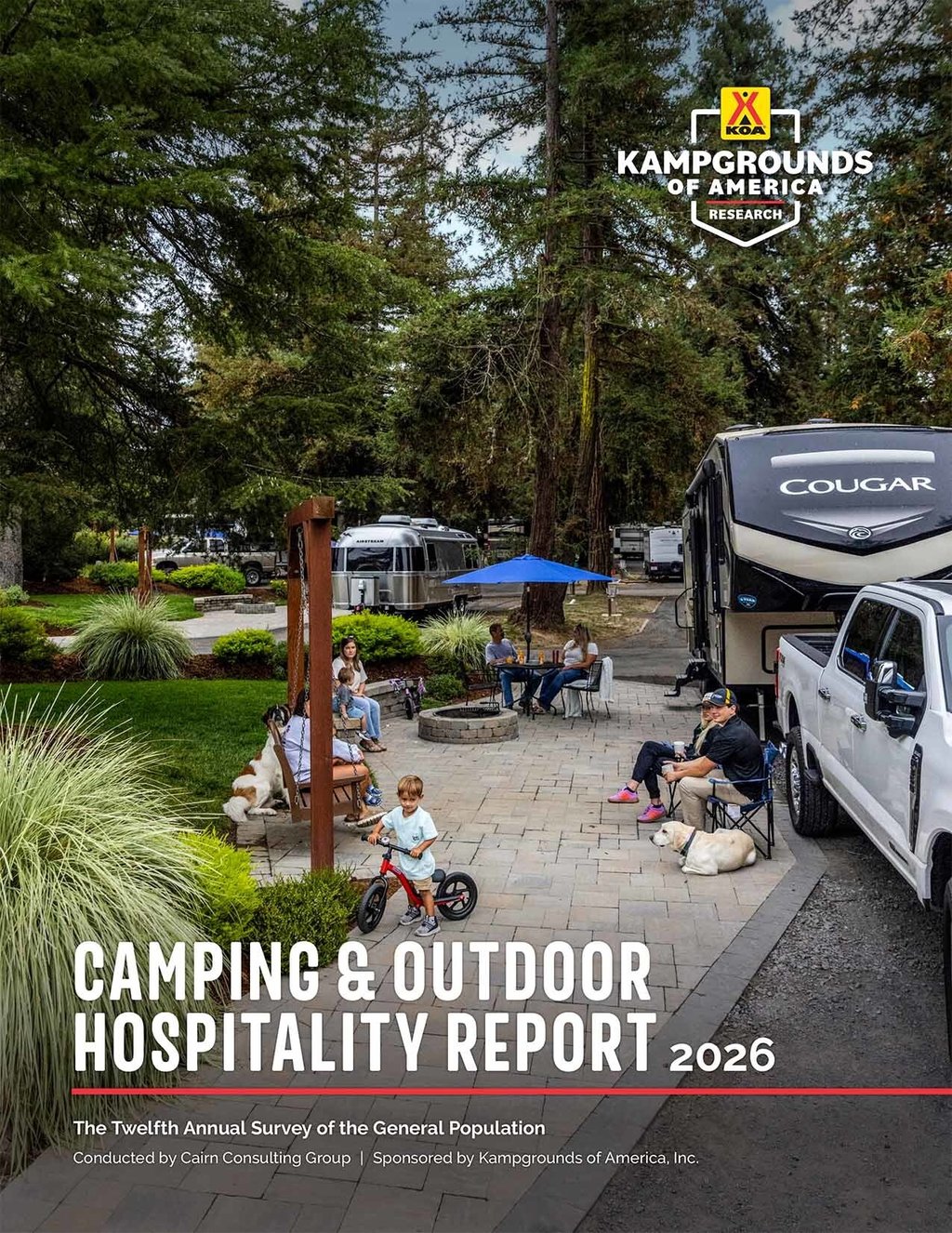
KOA Publishes 12th Annual Report on Camping and Outdoor Hospitality.
Kampgrounds of America has released its 12th Annual Camping and Outdoor Hospitality Report, revealing that outdoor hospitality has become a central part of how travelers prioritize wellness, connection, and meaningful experiences. The findings show more than 52 million North American households camped in 2025, exceeding pre-pandemic levels and contributing $66 billion to local community spending.
The report, developed in partnership with Leave No Trace, demonstrates that camping has evolved from a niche market into a meaningful pillar of North America's travel economy. The outdoor hospitality sector's economic footprint increased by $5 billion from 2024, driven by younger generations and families with children.
"This report demonstrates that camping isn't a niche market, it's a meaningful pillar of North America's travel economy and a vital resource for local communities," said Toby O'Rourke, KOA's president and CEO.
Economic Impact and Consumer Spending
Spending momentum continues to accelerate across the industry. Average daily expenditures per person, excluding accommodations, reached over $200 in 2025. The growth reflects both consumer engagement and willingness to invest in outdoor experiences as camping solidifies its position as an approachable travel option.
Thirty-five percent of adults cite camping as the easiest form of travel with children, while an equal percentage state camping is the most affordable travel option. These factors have helped sustain the expanded base of campers who entered the market during the pandemic surge between 2020 and 2022.
Wellness as Primary Motivation
Perhaps the most significant finding is the shift in why people camp. Wellness has emerged as a primary driver, with 77 percent of campers stating that just being in nature is enough without structured programming or additional amenities. This analog approach to camping prioritizes simplicity and natural restoration over curated experiences.
Nearly half of all campers (49 percent) intentionally book trips to improve mental wellbeing, and 50 percent prioritize experiences that help them recharge. Mental wellbeing ranks as the top wellness motivator across all generations, with outdoor activities like walking near water, wildlife viewing, and night sky viewing leading engagement.
"Nature isn't a luxury amenity," said O'Rourke. "It's a real, proven wellness intervention. For hospitality operators, this insight is transformative, positioning the campground experience itself as the product."
Social Connection and Community
The report reveals that three-fourths of campers view campgrounds as modern third places, or environments outside of home and work where genuine community happens. This finding carries particular significance for younger generations.
Gen Z campers, while less likely to have frequent interactions, are most likely to develop lasting bonds with other guests, with 43 percent staying in touch long-term. Millennials report that interactions with neighbors make their camping trips more memorable (40 percent), while Boomers demonstrate the highest frequency of social engagement, with 51 percent having at least one meaningful interaction per trip.
Market Growth Through Glamping
Glamping continues to drive market expansion, accounting for 29 percent of all camping experiences in 2025. The accommodations serve as a critical gateway for first-time campers, with 31 percent of new campers choosing glamping. The report also shows Boomers returning to camping after reduced participation during and after the pandemic.
However, retention challenges exist among younger generations due to price sensitivity, underscoring the importance of strategic pricing and accessible entry points for Gen Z and Millennials.
Looking Ahead
Campers are planning more ambitious travel in 2026, with 31 percent planning to spend more nights camping compared to 2025. Road trips, small-town exploration, and heritage travel are driving extended camping journeys, while major cultural events including the Route 66 Centennial and America 250 celebrations position outdoor hospitality as both nostalgic and forward-looking.
The survey included 4,088 completed surveys among U.S. and Canadian households, with a margin of error of plus or minus 1.82 percentage points for U.S. respondents and plus or minus 2.83 percentage points for Canadian respondents.
Related Stories
Lotti Media © 2025-2026
Lotti MEDIA is your go-to source for multi-industry insights, innovation, and more.
Stay in the Know
Join our mailing list today.
Powered by: Lotti Communications