
Lagavulin Launches 11 Year Old Sweet Peat, a New Take on Islay Whisky
HOSPITALITY
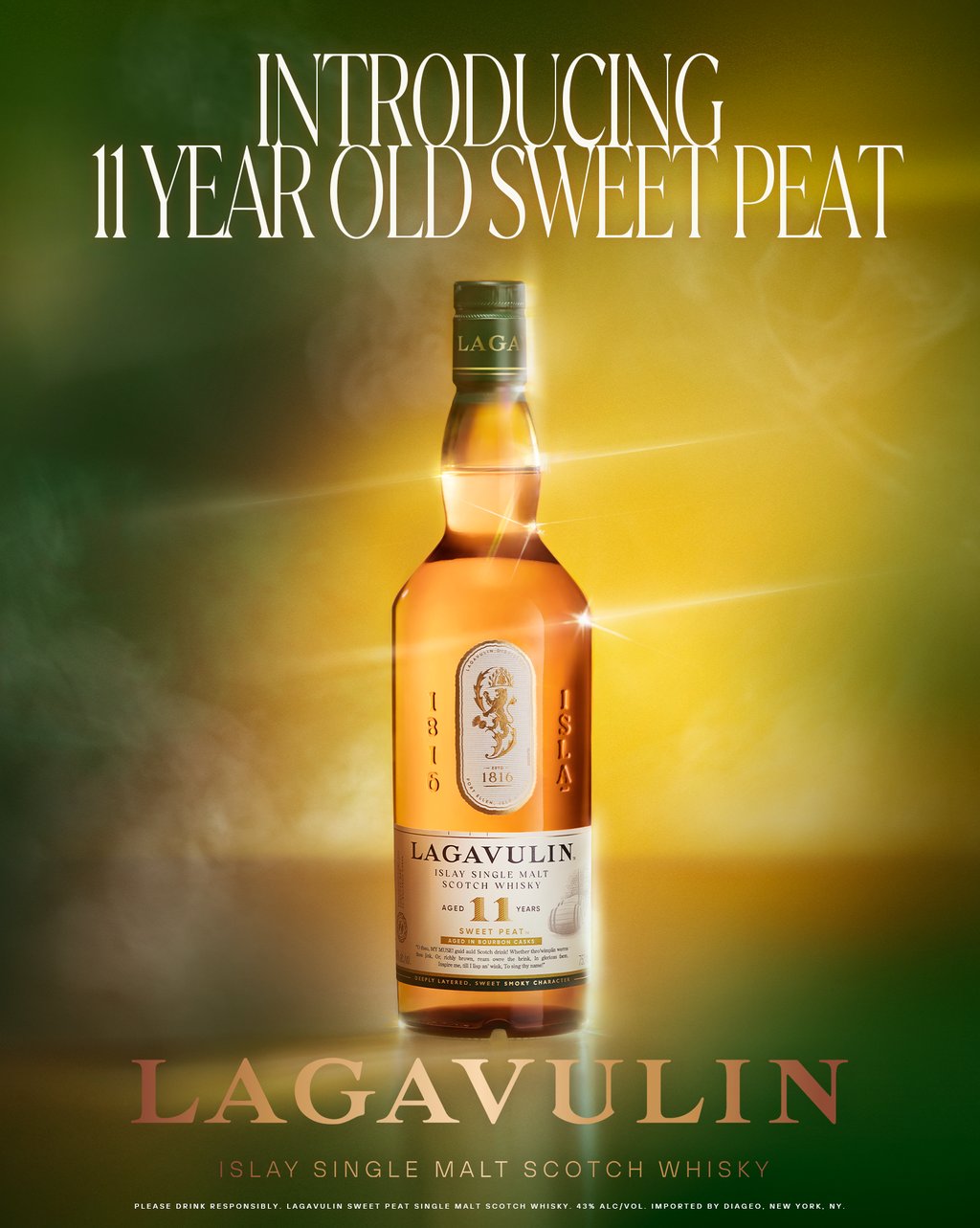

Matured in first-fill American oak ex-bourbon casks, the new permanent expression highlights sweetness from the oak and malt while maintaining Lagavulin's signature smoky profile.
For over two centuries, Lagavulin has been defined by bold, peaty Islay whisky. Its 16-year-old expression is considered a standard-bearer, intensely smoky, briny, and distinctive. As the whisky market broadens to include drinkers with varied preferences, even heritage distilleries are exploring new expressions. Today, Lagavulin announced its first new permanent release in nine years: Lagavulin 11 Year Old Sweet Peat.
The whisky isn't a move away from the distillery's signature smoke, it's a refinement. By maturing the spirit in first-fill American oak casks, Lagavulin has introduced a layer of sweetness that tempers, but doesn't obscure, the characteristic Islay peat.
The Architecture of First-Fill Oak
The "Sweet Peat" expression owes its profile to first-fill American oak ex-bourbon casks. While Lagavulin’s traditional maturation often leans into the maritime influence of the Atlantic air, the first-fill barrels provide a more direct infusion of vanilla, toffee apple, and soft spice.
The result is a spirit that Dr. Stuart Morrison, Diageo Master Blender, describes as having a more "rounded profile." On the palate, it opens with a gentle salinity before transitioning into layers of dark chocolate and honeyed malt, finishing with the long, lingering bonfire smoke that is unmistakably Lagavulin.
The "Approachable Peat" Strategy
The 11-year-old age statement is a deliberate choice, offering a structured, full-bodied texture that remains central to the Distillery’s squat, pear-shaped pot still distillation process. Already a Gold Medal winner at the 2025 San Francisco Wine & Spirits Competition, Sweet Peat is designed to bridge the gap between "peat-curious" drinkers and longtime followers of the brand.
“Pronounced smoke is a defining element of Islay Scotch, albeit one that can feel polarizing to some drinkers,” said Jesse Damashek, SVP of Whiskey at Diageo. “Sweet Peat presents peat in a way that tastes more approachable, while still delivering the depth and complexity long associated with Lagavulin.”
The Versatility of the Modern Pour
Reflecting the way whisky is enjoyed in 2026, from boutique hotel bars to unhurried moments at home, Lagavulin is leaning into versatility. While best enjoyed neat or on the rocks, the brand is actively promoting its use in contemporary cocktails, such as the Smoky Sweet Old Fashioned (with orange bitters and allspice dram) and the Sweet Peat Tea (a penicillin-inspired serve with honey-ginger syrup and black tea).
The "Complexity and Contrast" Advantage
The luxury spirits market has shifted from emphasizing singular, uncompromising flavors to exploring how contrasts can broaden appeal. Lagavulin's launch of Sweet Peat demonstrates how a heritage brand can evolve while staying true to its identity.
For spirit producers, the challenge is clear: what makes a whisky distinctive, in Lagavulin's case, its intense smokiness, can also be polarizing for new drinkers. By introducing a sweeter expression that softens but doesn't eliminate the peat, Lagavulin creates an entry point for those who might find the 16-year-old too assertive, while still offering something recognizably Lagavulin.
The strategic value lies in expanding the brand's reach without diluting what made it respected in the first place. A portfolio that includes both bold and approachable options allows a distillery to welcome newcomers while keeping long-time enthusiasts engaged. Brands that can thread this needle, honoring their heritage while meeting new consumers where they are, position themselves for sustained relevance across different audiences.
Related Stories
Lotti Media © 2025-2026
Lotti MEDIA is your go-to source for multi-industry insights, innovation, and more.
Stay in the Know
Join our mailing list today.
Powered by: Lotti Communications