
Motorola Solutions Opens AI and Resilience Software Hub in Boston
TECHNOLOGY
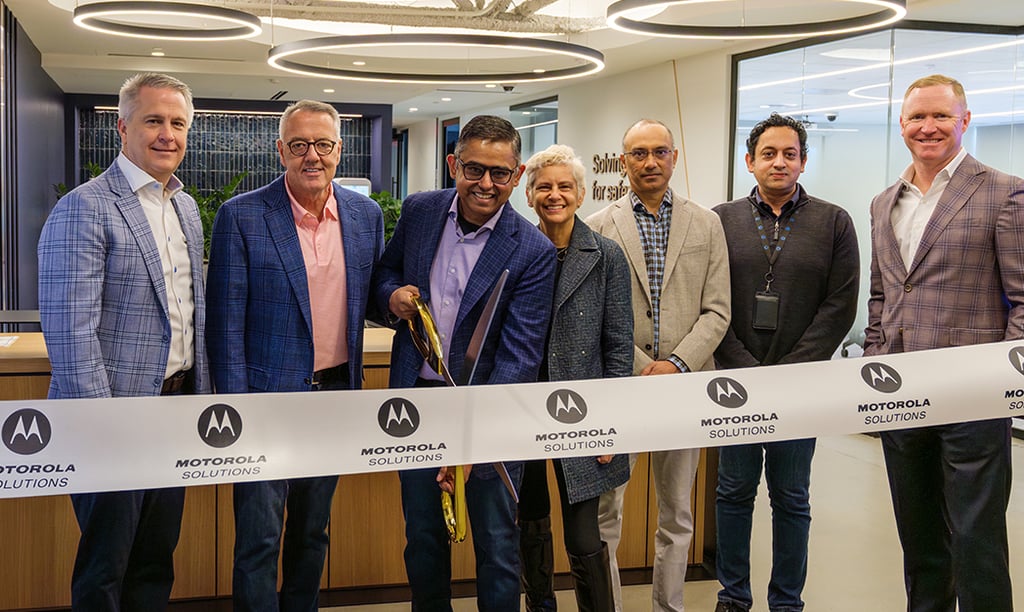
Motorola Solutions new AI and resilience software hub is designed to help accelerate the development of purposeful, mission-ready technologies. Photo credit: Motorola Solutions.
When an emergency unfolds at a school, a hospital, or a public venue, the difference between chaos and coordinated response often comes down to technology. Motorola Solutions has spent decades building that technology, and now it's betting big on Boston to help build the next generation of it.
The company announced the opening of a new AI and resilience software hub in Boston, Massachusetts, marking a significant expansion of its research and development footprint. The hub is designed to accelerate the development of applied AI and mission-critical, cloud-based solutions, the kind of purposeful, high-stakes technology that doesn't just need to be innovative, it needs to work flawlessly when lives are on the line.
Where AI Meets Real-World Emergency Response
Motorola Solutions isn't building AI for the sake of it. The platform being developed and refined at this new hub powers emergency coordination and collaboration between private enterprises and first responders, and thousands of K-12 schools and higher education institutions across the country already rely on it to manage complex incidents with speed and clarity.
That context matters. There's a significant difference between AI built for convenience and AI built for crisis. The team in Boston is working squarely in the latter category, where the margin for error is essentially zero.
Mahesh Saptharishi, Motorola Solutions' Executive Vice President and Chief Technology Officer, framed the mission plainly: "We aren't just building algorithms; we're delivering actionable intelligence for those who manage society's most complex security challenges. Deepening our expertise in Boston allows us to more effectively bridge the gap between complex data streams and meaningful action to better protect critical enterprises and communities."
That phrase, bridging the gap between complex data streams and meaningful action, is worth sitting with. In an emergency, raw data is useless without the systems to interpret it instantly and surface what decision-makers actually need to know. That's the hard problem Motorola Solutions is working to solve.
Why Boston?
The choice of location isn't incidental. Boston sits at the intersection of world-class academic institutions, deep engineering talent, and a long history of technology innovation. For a company building agentic systems, AI capable of managing real-world emergencies at scale, access to that talent pool is a genuine competitive advantage.
Jehan Wickramasuriya, Senior Vice President of Security & Resilience Software, put it directly: "Boston is a city defined by innovation, making it the ideal home for our new hub. If you want to deploy agentic systems that manage real-world emergencies at scale, Motorola Solutions is the place to be."
Motorola Solutions also isn't starting from scratch in Massachusetts. The company has maintained a long-standing presence in the Commonwealth, supporting public safety agencies and enterprises for decades. The new hub deepens that commitment rather than establishing it.
Building the Future of Safety
The Boston hub will support roles across AI research, software engineering, and product management, a signal that this is a serious, long-term investment rather than a satellite office. For engineers and researchers who want their work to mean something beyond quarterly metrics, the pitch is a compelling one.
Public safety technology rarely gets the attention of consumer AI, but in many ways, it's where the stakes are highest. Motorola Solutions is making sure it has the people and the place to keep getting it right.
Related Stories
Lotti Media © 2025-2026
Lotti MEDIA is your go-to source for multi-industry insights, innovation, and more.
Stay in the Know
Join our mailing list today.
Powered by: Lotti Communications