
New ASHA-Lantern Texting Program Provides Expert Advice for Handling Picky Eating and Other Feeding Challenges
HEALTH & BEAUTY
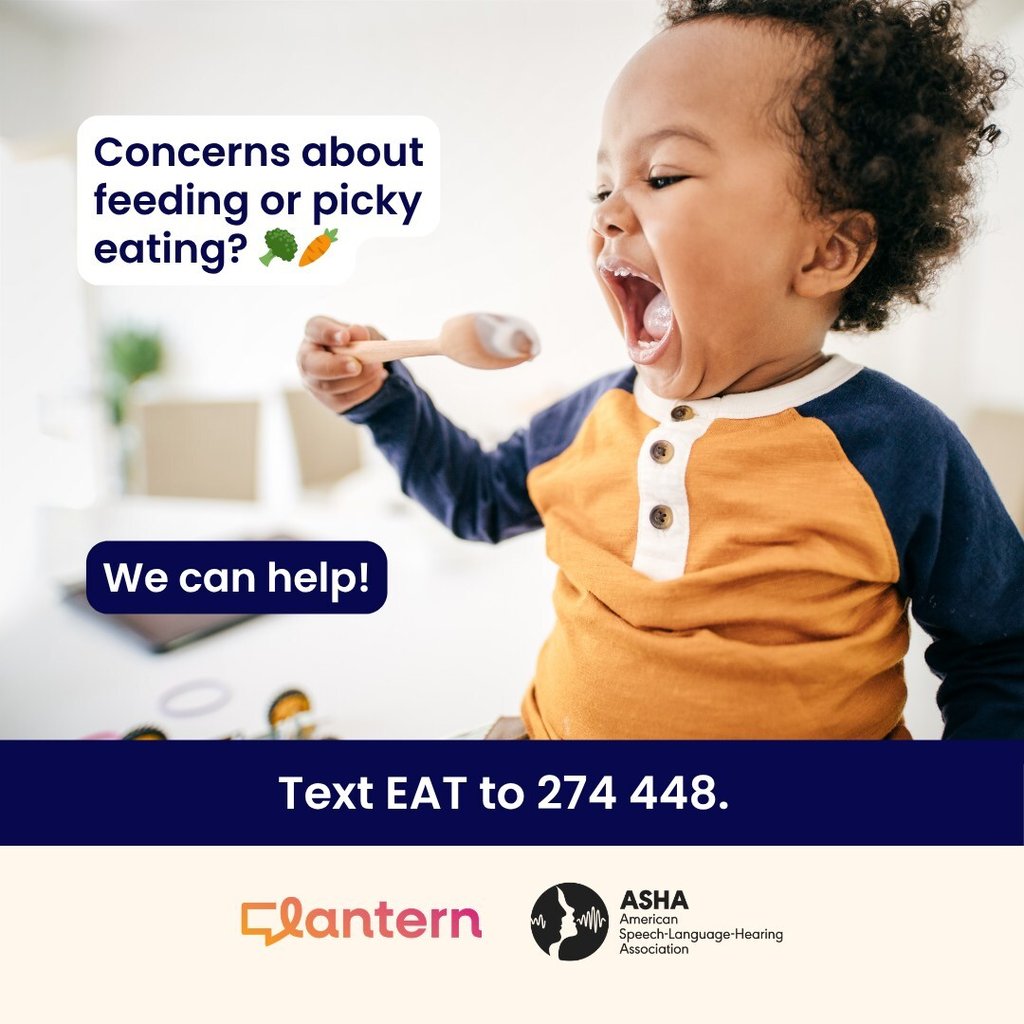
The new, free texting program is for caregivers of children ages 6 months to 5 years.
The American Speech-Language-Hearing Association and Lantern have developed EAT, a free new texting program offering trusted information to families in a format that's quick, convenient, and right at their fingertips. Feeding challenges are among the most common and stressful issues that families with young children face. However, caregivers searching for guidance often are met with lots of conflicting, questionable, and even potentially harmful information.
Target Audience and Clinical Context
Launching today, EAT is designed for caregivers of children ages 6 months to 5 years, particularly those who have questions or concerns about their child's feeding skills. Feeding challenges can range from everyday difficulties often referred to as picky eating to pediatric feeding disorder, a clinical diagnosis treated by health care professionals such as speech-language pathologists. Regardless of the cause, feeding challenges can cause severe distress and interfere with daily life.
Although estimates vary, studies suggest that approximately one fourth to one third of children, on average, will struggle with some type of feeding and/or growth issue in their first decade, according to Feeding Matters. The prevalence data underscores the scale of need for accessible, evidence-based guidance that caregivers can implement at home while also recognizing when professional intervention becomes necessary.
Strategic Rationale and Access Barriers
"Parents and caregivers put tremendous pressure on themselves when it comes to feeding their children, and it can be incredibly upsetting when a child has difficulty eating," said 2026 ASHA President Linda I. Rosa-Lugo, EdD, CCC-SLP, ASHA Fellow. "Reliable, easy-to-access information can make a real difference. By meeting families where they are, in the midst of their busy lives, the EAT program can effectively empower caregivers and help ensure that all children have the best possible start in life, at the table and beyond."
The positioning addresses a documented gap in caregiver support: access to clinically accurate feeding guidance delivered in formats compatible with the time constraints and stress levels families experience during mealtimes. The text message delivery model removes barriers associated with appointment scheduling, transportation, and dedicated reading time.
Misinformation Landscape and Screening Challenges
Lantern Chief Content Officer Jodie Fishman, MPH, MCHES, added, "Misinformation can lead parents down unproductive paths when it comes to how, and what, to feed their children. Additionally, many caregivers struggle with distinguishing typical feeding concerns or variations in development from the signs of a disorder. This can lead to delays in seeking help, which can contribute to prolonged stress around mealtimes and missed opportunities for early intervention."
The statement reflects research showing that online feeding advice frequently contradicts clinical guidelines, creating confusion about whether observed behaviors represent normal developmental variation or clinical concerns requiring specialist evaluation. The delay in professional consultation can compound feeding difficulties as maladaptive patterns become more entrenched.
Program Mechanics and Content Delivery
Families can sign up for the program simply by texting EAT to 274-448 or by filling out the form on Lantern's website. The program is free with no advertisements or solicitations. Subscriber information is never shared with any third party.
Once enrolled, subscribers will receive one text message per week for about 5 months. The messages generally link to a landing page with more in-depth information about the subject of the text message. The content is a mix of information about specific feeding topics, messages of encouragement, and several subscriber surveys to help ASHA and Lantern assess the program's effectiveness. Content is available in English, Spanish, and Arabic.
Content Scope and Clinical Topics
Topics addressed in the messages include feeding strategies such as responsive feeding and food chaining, guidance on the use of sippy cups and food pouches, everyday tips for expanding a child's diet, developmental milestones for feeding, and signs that a child might need professional help.
The content architecture balances practical implementation guidance with clinical screening criteria, enabling caregivers to both apply evidence-based techniques and recognize red flags that warrant professional assessment. The responsive feeding and food chaining methodologies represent established clinical protocols adapted for caregiver-directed application.
Partnership History and Recognition
The EAT program is the third specialty texting program that ASHA and Lantern have collaborated on since 2021. The first, TALK, is designed for families/caregivers of children who have concerns about their child's speech or language skills. The second, HEAR, is for families/caregivers of children with confirmed or suspected hearing loss. The TALK and HEAR programs won a 2025 Summit Award, the highest recognition for associations making a meaningful difference in the United States and around the world.
The award recognition validates the delivery model and partnership approach, suggesting that the text-based, longitudinal engagement format produces measurable impact beyond traditional one-time educational interventions.
Expert Development Team and Target Professionals
All content for the EAT program was developed by a team of experts, ASHA-certified speech-language pathologists who specialize in pediatric feeding and swallowing. The credentialing requirement ensures clinical accuracy while the subspecialty focus provides depth in addressing the range of feeding challenges families encounter.
In addition to families of young children, the program is intended for pediatric health care providers such as pediatricians, speech-language pathologists, dietitians, and occupational therapists, all of whom can utilize this resource as an educational tool with families. The professional audience positioning enables providers to prescribe the program as a complement to clinical care rather than a replacement for it.
About the American Speech-Language-Hearing Association
ASHA is the national professional, scientific, and credentialing association for 247,000 members, certificate holders, and affiliates who are audiologists, speech-language pathologists, speech, language, and hearing scientists, audiology and speech-language pathology assistants, and students. Audiologists specialize in preventing and assessing hearing and balance disorders as well as providing audiologic treatment, including hearing aids. Speech-language pathologists identify, assess, and treat speech, language, and swallowing disorders. Additional information is available at www.asha.org.
About Lantern
Lantern delivers evidence-based early childhood information to more than half a million parents and caregivers of children, prenatally through age 10, across the United States. Lantern is proven to strengthen families, promote healthy child development, and improve school readiness. Additional information is available at mylantern.org.
Related Stories
Lotti Media © 2025-2026
Lotti MEDIA is your go-to source for multi-industry insights, innovation, and more.
Stay in the Know
Join our mailing list today.
Powered by: Lotti Communications