
New National Survey from St. Jude Examines Role of Hope in America
MARKETING
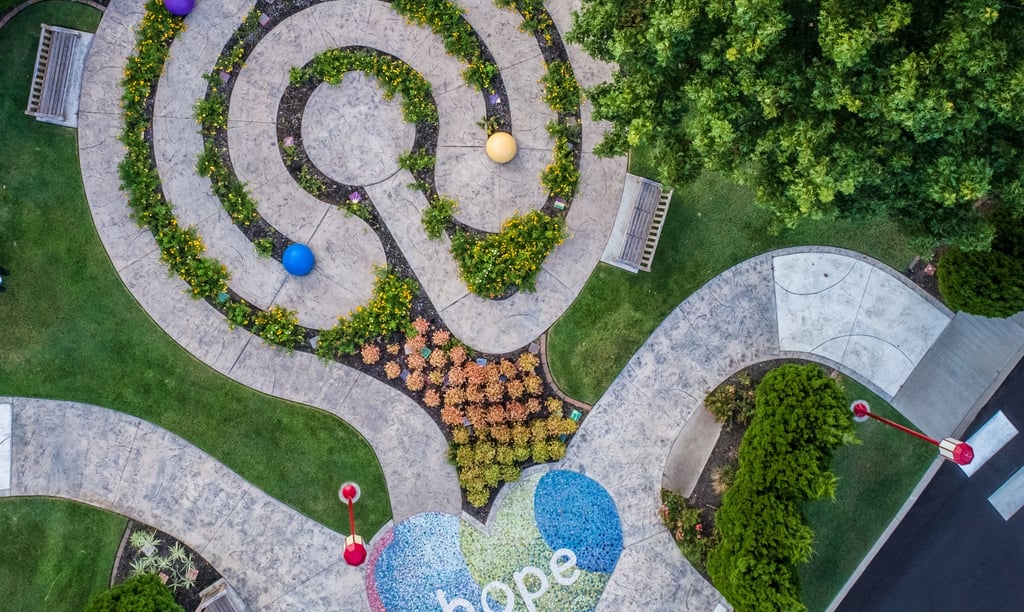
Photo Courtesy: ALSAC/St. Jude Children's Research Hospital.
ALSAC, the fundraising and awareness organization for St. Jude Children's Research Hospital, released The St. Jude Hope Imperative, a national survey of U.S. adults conducted by The Harris Poll exploring how Americans understand, experience, and practice hope.
Research Motivation and Strategic Context
"Hope is an important part of the journeys of St. Jude patients and their families, and we wanted to better understand how it shows up across Americans' daily lives, not just in moments of crisis," said Samantha Maltin, Chief Marketing and Brand Officer of ALSAC. "This study establishes a first-of-its-kind benchmark to track how hope is experienced in America and how it translates into action, generosity and genuine connection."
The research extends beyond institutional messaging to examine hope as actionable construct in daily American life, creating measurement framework for tracking cultural sentiment while positioning St. Jude within broader conversation about optimism, agency, and collective efficacy.
Core Findings and Hope as Practice
A key finding was that hope is essential, with nearly 9 out of 10 Americans reporting they couldn't imagine living in a world without hope. Crucially, the study revealed that hope in America advances through the regular rhythms of daily life rather than emerging solely in times of distress. Nearly all respondents reported taking deliberate action in the past year to cultivate hope, with more than 91 percent saying helping others, even in small ways, is one of the most powerful ways they express hope.
The 96 percent deliberate action rate suggests hope functions as active practice rather than passive emotion, while the 91 percent connection between helping others and hope expression creates framework for understanding charitable behavior as hope-building mechanism rather than purely altruistic response.
Personal Versus Societal Optimism Gap
The survey showed a notable gap between how Americans view their personal futures versus the future of society, driven in part by whether individuals can see tangible progress and believe their actions matter. In that context, charitable giving becomes a meaningful outlet for practicing hope, particularly when people can clearly see the impact of what they contribute.
"What we see in the data is that hope is not abstract. Hope is a practice. It's built through everyday actions, small acts of generosity and the connections people create with others," Maltin said. "Charitable giving is one of the ways people turn hope into action, helping them feel that what they do makes a real difference."
The personal-societal optimism divergence reflects documented pattern where individuals maintain control optimism about immediate circumstances while expressing pessimism about collective outcomes, creating opportunity for organizations to bridge gap through demonstrable impact.
Nonprofit Sector and Hope Cultivation
The survey found that nonprofit organizations play a central role in fostering hope, with 84 percent of respondents saying nonprofits give them hope and 77 percent saying they are more likely to support organizations that inspire it. St. Jude, in particular, is strongly associated with hope, with 93 percent of survey respondents saying the organization makes them think of hope.
The 93 percent St. Jude hope association represents exceptional brand strength in emotional territory beyond typical awareness or favorability metrics, while the 84 percent nonprofit hope attribution validates sector's role in maintaining social optimism.
Impact Visibility and Donor Behavior
Visible progress also emerged as a critical factor. Ninety percent of respondents say seeing measurable impact from nonprofits increases their sense of hope for the future. That includes awareness that childhood cancer survival rates in the U.S. have increased from 20 percent to more than 80 percent over the past 60 years.
The childhood cancer survival rate improvement provides concrete demonstration of medical progress driving hope, while the 90 percent impact-visibility finding validates transparency and outcome reporting as donor retention strategies beyond compliance requirements.
Seventy-two percent say giving more frequently helps them feel they are making a difference, suggesting recurring donation programs serve psychological function beyond financial predictability for organizations.
Implications and Action Framework
Overall, the findings reinforce that hope in America is sustained through action, generosity, and visible progress. Rather than something abstract, hope is shaping how individuals turn intention into impact every day.
The research positions hope as measurable construct built through visible progress, helping behaviors, and tangible outcomes, creating framework for nonprofit messaging that emphasizes impact demonstration over mission statements or emotional appeals alone.
Survey Methodology
This survey was conducted by The Harris Poll on behalf of ALSAC/St. Jude from March 23-31, 2026 among 2,501 U.S. adults ages 18 and older. The sample data is accurate to within plus or minus 2.5 percentage points using a 95 percent confidence interval. Full findings are available at stjude.org.
About St. Jude Children's Research Hospital
St. Jude Children's Research Hospital is leading the way the world understands, treats, and defeats childhood cancer and other life-threatening diseases. When St. Jude opened in 1962, childhood cancer was considered largely incurable. Since then, St. Jude has helped push the overall survival rate in the U.S. from 20 percent to more than 80 percent. Because of generous donors, families never receive a bill from St. Jude for treatment, travel, housing, or food. Additional information is available at stjude.org.
Related Stories
Lotti Media © 2025-2026
Lotti MEDIA is your go-to source for multi-industry insights, innovation, and more.
Stay in the Know
Join our mailing list today.
Powered by: Lotti Communications