
Philips Report Finds AI Delivering Real-World Impact on Clinical Care Across the United States
HEALTH & BEAUTY
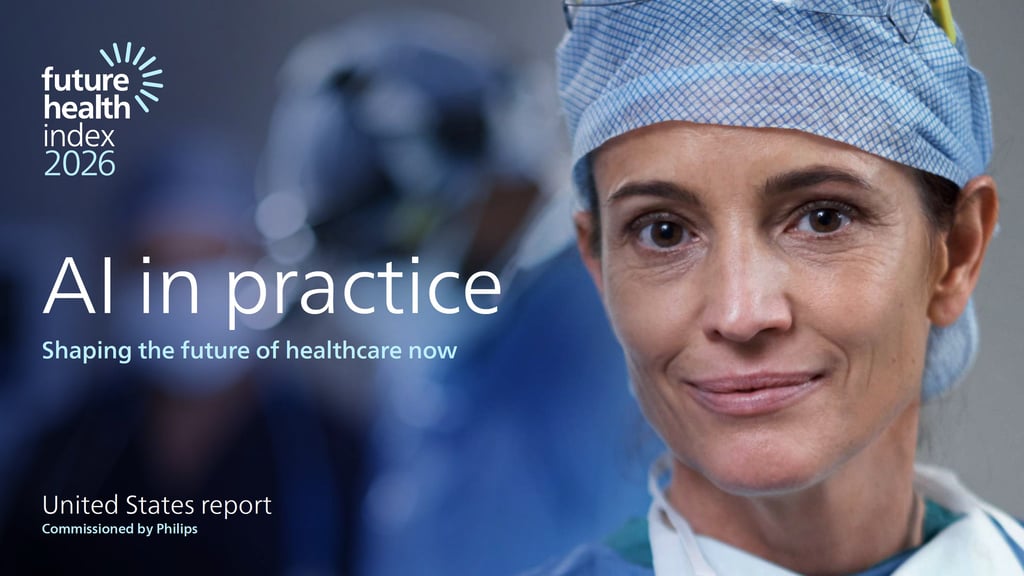
Philips Study Highlights growing role of AI in advancing patient care across U.S. health systems.
Royal Philips has released its Future Health Index (FHI) 2026 U.S. report, and the findings paint a clear picture: AI is no longer a future aspiration in healthcare, it’s a present‑day force reshaping clinical practice across the country. As health systems face mounting pressure from workforce shortages, rising patient volumes, and increasing administrative demands, AI is emerging as a critical partner in delivering safer, faster, and more efficient care.
The report, AI in practice: Shaping the future of healthcare now, draws on insights from more than 2,000 healthcare professionals and 20,000 patients across 10 countries. Its U.S. findings reveal a sector rapidly moving from experimentation to meaningful, measurable impact.
AI Is Expanding Clinical Capacity
One of the most striking findings: 36% of U.S. healthcare professionals say AI has increased their capacity to see more patients, with clinicians reporting a median of five additional patients per week. In a strained system, that regained capacity is significant.
AI is also helping clinicians reclaim time that has long been lost to administrative work. Nearly half of respondents (49%) say AI saves them at least 132 hours per year, the equivalent of more than three full workweeks. That time is being reinvested into higher‑value tasks such as deeper case analysis, patient communication, and staying current with clinical research.
AI Is Improving Safety, Decision‑Making, and Clinician Well‑Being
The report highlights AI’s growing role in supporting safer care. More than one-quarter of clinicians (27%) say AI has helped them identify or prevent a potential medical error at least three times in the past three months.
Beyond clinical outcomes, AI is also improving clinician well‑being, a critical need in a profession grappling with burnout. Respondents report:
Better work‑life balance (35%)
Reduced work‑related stress (36%)
Less overtime and after-hours work (32%)
These improvements underscore AI’s potential not only as a clinical tool but as a workforce sustainability solution.
The Rise of the “Hybrid Care Team”
A major theme emerging from the 2026 report is the evolution of a hybrid care team, where AI acts as a supportive partner while clinicians remain firmly in control of care decisions.
Most clinicians express comfort with AI assisting in areas such as:
Diagnostic decision support
Medical image analysis
Imaging processing
Surgical guidance
Yet the message is clear: human judgment remains essential. More than 90% of clinicians say keeping a human in the loop is critical as AI advances.
Training and Infrastructure Still Lag Behind Adoption
Despite rapid adoption, with 74% of clinicians reporting increased use of AI tools in the past year, readiness challenges persist. Nearly eight in ten say training for AI‑enabled tools is limited or inconsistent, signaling a need for stronger education, governance, and infrastructure to support safe, scalable AI integration.
A Turning Point for U.S. Healthcare
As Jeff DiLullo, Chief Region Leader for Philips North America, notes, “The growth in adoption of AI over the last year has been nothing short of remarkable.” The 2026 FHI report makes clear that AI is already delivering an “AI dividend,” more time, more capacity, and better care.
With thoughtful implementation and continued investment in training and workflow integration, AI is poised to help healthcare systems meet rising demand while improving the clinician and patient experience.
Related Stories
Lotti Media © 2025-2026
Lotti MEDIA is your go-to source for multi-industry insights, innovation, and more.
Stay in the Know
Join our mailing list today.
Powered by: Lotti Communications