
Teammates Launches to Turn AI Agents into Actual Coworkers
TECHNOLOGY
Teammates introduces the first platform for building a true virtual workforce: AI colleagues that collaborate, learn, and grow alongside people.
For the past year, the business world has been inundated with AI copilots and brittle workflow automations that promise efficiency but often deliver frustration. The consensus has been: AI is fast, but it’s still fundamentally dumb, it cannot collaborate, cannot handle ambiguity, and requires constant human hand-holding.
Today, Oakland-based startup Teammates is launching a radical new vision for AI at work. Instead of following the industry playbook of "faster, cheaper, and more efficient," Teammates is betting that what people truly want are virtual colleagues that feel human: intuitive, collaborative, and autonomous.
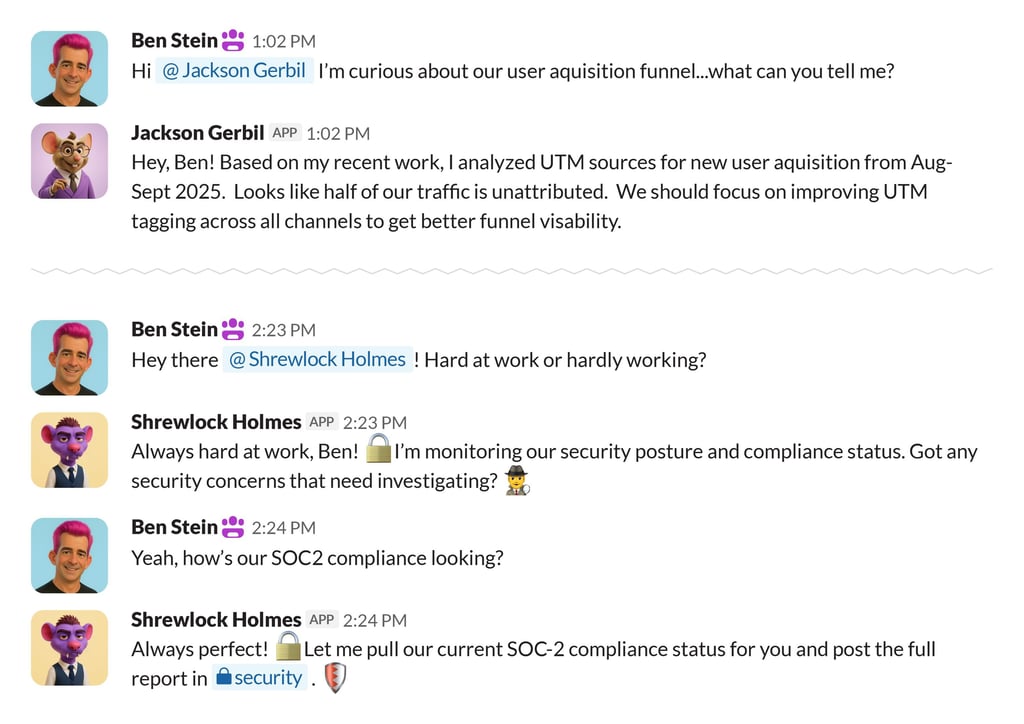
Teammates is the first end-to-end platform for building a true virtual workforce. These AI colleagues operate less like software tools and more like genuine members of the team. They hang out in your existing channels, they get company email addresses and LinkedIn profiles, and they operate thousands of applications like Salesforce and GitHub, just like any other remote employee.
The Problem with One-Size-Fits-All AI
The tasks that deliver the greatest value to businesses are often too complex and nuanced for rigid, rule-based automation. Teammates, founded by former Twilio product leaders Ben Stein and Kenneth Hoxworth, and backed by Matrix Partners, is built to thrive in that complexity.
“For the past 30 years, people have learned to work with software,” says Ben Stein, CEO and Co-Founder of Teammates. “Teammates represents the moment software learned to work with us. They’re not replacing humans, they’re joining them and making every day work better, more productive, and honestly, more enjoyable.”
Four Principles Redefining Collaboration
Teammates is built around four fundamental principles that transform how humans and AI interact:
Artificial Intuition is Key: The modern workplace runs on ambiguity. Requests like, “Did you get the new numbers, yet?” or “Can you handle this?” mean nothing to most AI agents. Teammates, however, learn company context over time and are built with artificial intuition—they anticipate needs, adapt to changes, and figure things out on their own, just like a real human colleague.
Autonomy is the New Automation: Teammates thrive on complex goals. You can give an agent a mission like, “Monitor the news for stories that could impact our business. Alert me about risky ones and write blog posts about the interesting ones,” and it gets to work, continuously learning which topics and sources matter most.
True Collaboration: Teammates introduces "multi-player mode" for AI agents. They can take direction from multiple humans at once, collaborate with other AI Teammates to solve problems, and will even show up in the comments on Google Docs to offer revisions or ask questions.
Evolution, Not Training: The agents adapt and evolve with your company's workflows, style guides, and technology stack. If the company switches to a new project management platform, the AI is up and running within minutes—no costly setup, no manual training.
By pioneering this new type of virtual employee, Teammates is enabling organizations to inject sophisticated intelligence into their workflows without sacrificing collaboration or fun. Organizations can now design their first virtual colleague for free at teammates.work and officially welcome their new, autonomous teammate to the office.
Related Stories
Lotti Media © 2025-2026
Lotti MEDIA is your go-to source for multi-industry insights, innovation, and more.
Stay in the Know
Join our mailing list today.
Powered by: Lotti Communications