
The Rise of Brand Programming: Why Companies Are Thinking Like TV Networks
MARKETING
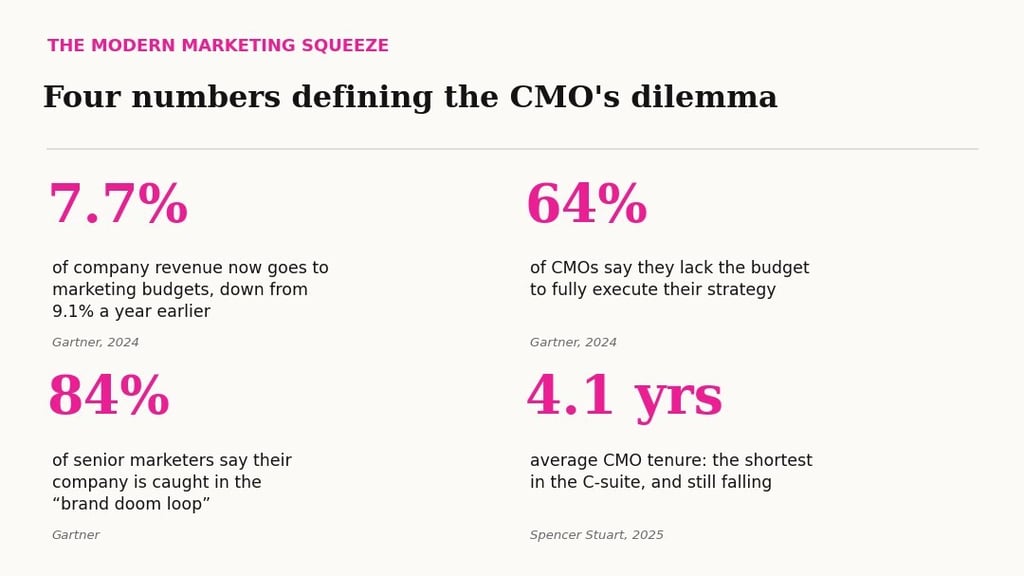
Sources: Gartner CMO Spend Survey (2024); Gartner; Spencer Stuart CMO Tenure Study (2025).
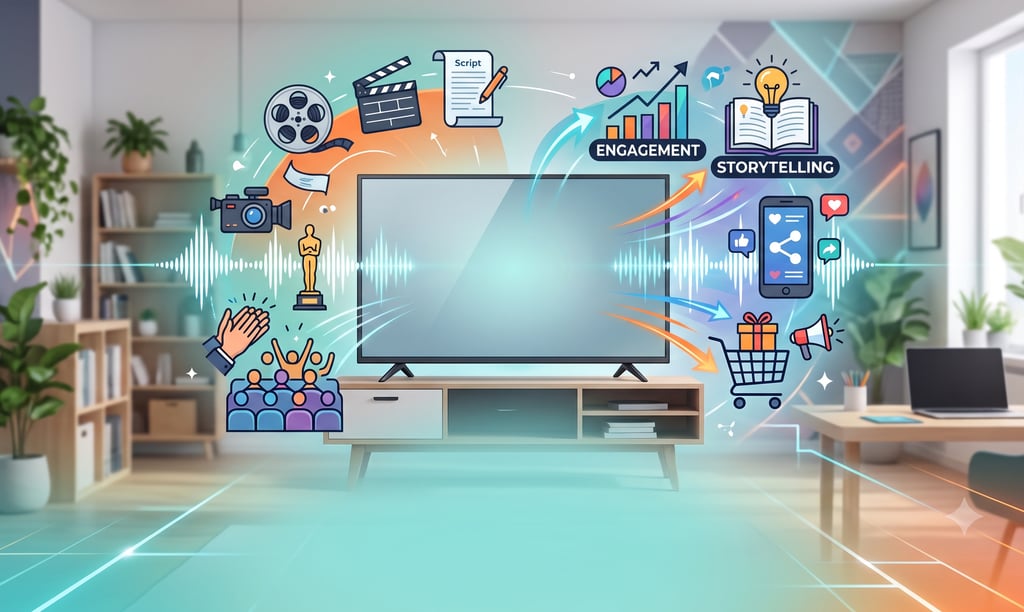
In a new analysis, creative studio della argues that the smartest modern brands are beginning to operate more like prestige television shows, and less like traditional marketing organizations. The reason: today’s fragmented media landscape demands long‑form narrative consistency, cross‑platform cohesion, and a single strategic owner who can hold the entire brand story in their head at once.
The comparison centers on the showrunner, the person who oversees every episode of a TV season, ensuring tone, continuity, and payoff. According to della, this role has become one of the most accurate metaphors for what brands now need, but increasingly lack, as marketing teams stretch across dozens of channels, formats, and cultural moments.
Marketing Budgets Are Shrinking, and Pressure Is Rising
The analysis highlights a series of structural pressures facing today’s marketing leaders:
Marketing budgets fell to 7.7% of company revenue in 2024, down from 9.1% the year prior and far below pre‑pandemic norms of roughly 11%.
64% of CMOs say they lack the budget to fully execute their strategy.
Average CMO tenure is now just 4.1 years, the shortest in the C‑suite.
With less money and less time, marketers increasingly default to what they can measure, fueling what Gartner calls the “brand doom loop.” In this cycle, teams over‑invest in short‑term performance tactics, under‑invest in brand building, and ultimately see diminishing returns quarter after quarter. Over‑indexing on performance can cut overall revenue ROI by up to 40%, while rebalancing toward brand can lift ROI by roughly 90%.
The Surface Area of Modern Brands Has Exploded
Brands today must show up everywhere, and constantly.
In 2024, brands posted an average of 9.5 times per day across social platforms.
Three‑quarters of social users expect a response within 24 hours.
Cultural reactions only land if they arrive within 24–48 hours.
This pace makes traditional, slow‑moving creative processes nearly impossible. By the time a polished campaign is ready, the cultural moment has often passed.
Why Brands Need Showrunners, Not Just Campaigns
della argues that the showrunner model solves several modern marketing challenges:
Narrative continuity: Someone must ensure that a brand’s tone, story, and emotional arc remain consistent across dozens of creators, agencies, and platforms.
Long‑term payoff: Just like a TV season, brand storytelling requires setups, callbacks, and emotional through‑lines that build over time.
Protection from compromise: A showrunner shields the brand from the “hundred small compromises” that dilute identity.
When done well, audiences don’t notice the orchestration, they simply feel the brand’s world as whole, coherent, and emotionally resonant.
Brands as Ongoing Story Worlds
The analysis concludes that the smartest brands are shifting from posts to programming, building long‑form narrative universes rather than one‑off campaigns. This mirrors the entertainment industry’s evolution and reflects how audiences now consume content: continuously, episodically, and across multiple screens.
In a world where attention is scarce and interruption is ignored, brands that behave like television shows, with showrunners guiding tone, pacing, and continuity, are best positioned to earn trust, build memory, and create lasting cultural impact.
Related Stories
Lotti Media © 2025-2026
Lotti MEDIA is your go-to source for multi-industry insights, innovation, and more.
Stay in the Know
Join our mailing list today.
Powered by: Lotti Communications