
Yum! Brands Unveils the Future of Dining
HOSPITALITYMARKETING
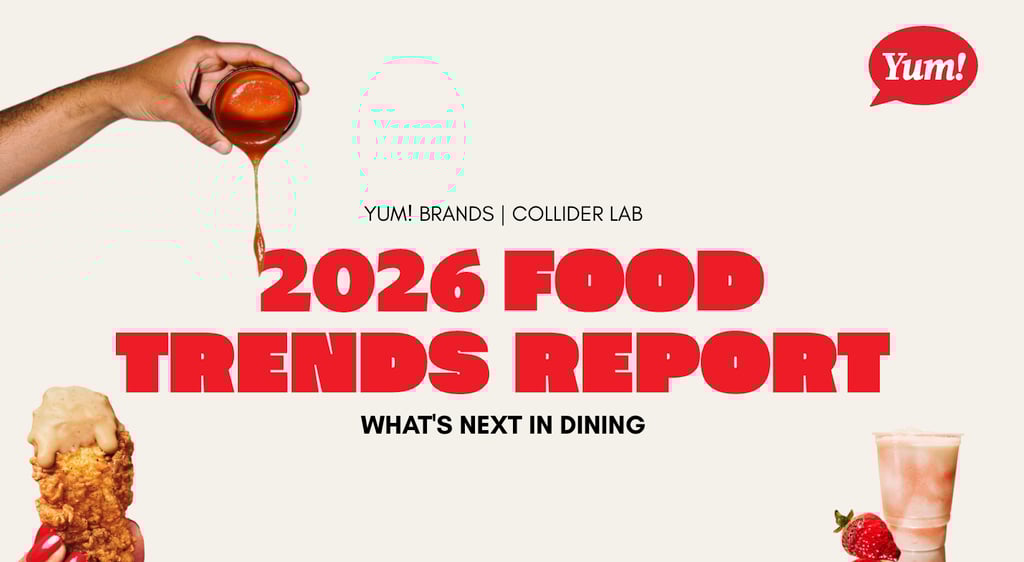
The 2026 Food Trends Report: What’s Next in Dining uncovers the cultural and consumer shifts shaping how and what people will eat in 2026, offering insights on the evolving expectations of modern diners.
The way the world eats is changing, and it’s no longer just about convenience or price. It’s about emotion, control, and personal expression. Yum! Brands, Inc., the global powerhouse behind KFC, Pizza Hut, Taco Bell, and Habit Burger & Grill, has leveraged its unprecedented global scale to unveil its first-ever insights publication: The 2026 Food Trends Report: What's Next in Dining.
This groundbreaking report, developed in collaboration with Yum!’s internal strategy agency, Collider Lab, uncovers the profound cultural and consumer shifts shaping how and what people will eat in 2026. The core finding? Consumers are increasingly using food to reclaim a vital sense of agency in an unpredictable world, demanding experiences that reflect individual tastes and provide hands-on engagement.
"Our global footprint gives us unique visibility into the ever-changing ways people order and experience food,” said Ken Muench, Chief Marketing Officer, Yum! Brands, Inc. and Co-Founder of Collider Lab. “The 2026 Food Trends Report helps us see where culture is headed and gives our brands a clearer path to creating more moments of joyful, flavorful ownership for our customers.”
The Me-Me-Me Economy: Dining for One
The traditional group meal is giving way to individual autonomy. The report highlights a significant shift toward personal expression, even in shared dining spaces:
Solo Dining as Self-Care: Solo orders have surged by 52% since 2021, now accounting for 47% of Quick Service Restaurant (QSR) dining occasions. These diners are often treating themselves, with over half spending $10–$30+ per visit.
Personalized, Not Shared: Even when dining with others, customers crave autonomy. The report shows that 31% of custom orders are made within groups of just two, and personal-size pizzas are increasingly popular with Gen Z and Millennials.
Choice Therapy: The Ritual of Control
In a chaotic world, consumers are gravitating toward small, sensory decisions that offer a moment of emotional grounding, a trend the report calls "Choice Therapy."
The ability to create one's own meal is a powerful differentiator. Concepts that allow consumers to “Build Your Own” consistently outperform convenience-led alternatives. At Taco Bell, their Build Your Own Taco offerings generated a remarkable 72% positive sentiment.
Furthermore, simple additions like sauces are a top tool for an emotional reset, with consumers saying that sauces are 2.4 times more likely to bring excitement to the everyday compared to other food items. This desire for customization is so influential that 71% of KFC's top-performing menu item tests involved specific sauces.
Vibe-Mathing: The Dopamine Economy
Today’s consumers approach food choices through a blend of logic and emotion. Items that feel uplifting or aesthetically satisfying can outweigh the price tag, a trend dubbed “Vibe-Mathing.”
The report reveals that whether a QSR brand “is very cool” is the number one attribute driving momentum, even outranking whether the restaurant has craveable food. This emotional value is seen clearest in the beverage space: “Drinks for Dopamine” are small, accessible joys, with 43% of specialty beverages purchased entirely standalone, without a food order. Consumers are looking for products that deliver a mood boost and a sense of affordable, everyday luxury.
By understanding these three core trends, Yum! Brands is positioned to guide the next chapter of dining innovation, ensuring their global portfolio continues to meet the evolving emotional and culinary needs of consumers worldwide.
Related Stories
Lotti Media © 2025-2026
Lotti MEDIA is your go-to source for multi-industry insights, innovation, and more.
Stay in the Know
Join our mailing list today.
Powered by: Lotti Communications